Shambhala isn’t EDC with trees. It’s a family-run camping festival on a BC ranch with a river running through it, six independently run stages, and a bass scene that’s its own thing. If you’re crossing the border for the first time, there’s stuff nobody told you, so here’s the Shambhala festival first timer guide I wish I’d had.
Heads up before you plan anything: the 2027 edition sold out within hours of going on sale on September 15, 2026, and the festival has a waitlist open. This guide is for people who got in, people on the waitlist, and anyone planning ahead for a future year.
The quick answer
- Shambhala 2027 is the 28th annual edition, July 23 to 26, 2027, at Salmo River Ranch near Salmo, BC. General admission access starts 8am Friday, with earlier entry options.
- Every ticket is general admission and includes free tent camping and free parking. Car camping and ShambhaLodging are paid upgrades. The festival is 19+, with ID checked.
- Alcohol isn’t allowed. The festival’s safety page lists possessing it as a Code of Conduct violation that can mean a warning or ejection.
- Border crossing with festival gear is the #1 first-timer trip-up. Check the rules for your crossing, leave anything questionable at home, and build in extra time.
- Six stages, each with its own crew: Pagoda, Fractal Forest, Village, Living Room, Grove, AMPhitheatre.
- The Salmo River runs through the site. Bring water shoes, and read the festival’s river safety rules.
- ANKORS runs free drug checking and harm reduction on site. This isn’t a US corporate fest and it shows.
What makes Shambhala different from US bass festivals
Shambhala has been running on the Bundschuh family ranch since 1998. Still family-run. Still no corporate sponsors. There’s no VIP bottle service tier and no logo wall at the entrance.
The biggest shock for US bass heads: no alcohol at all. No bars, no beer gardens, no $18 vodka sodas at the rail. For anyone who wants a substance-free space, Camp Clean Beats is a free sober-supportive camping zone. It completely changes the energy. People are hydrated. People remember the sets.
Each of the six stages is run by its own Stage Director with its own sound system. So you’re not getting one talent buyer’s taste across the whole weekend. You’re getting six different musical philosophies in one valley.
Crossing the border with your festival kit
Okay so, the border. This is where first-timers get wrecked.
The festival lists three US crossings: Nelway (about 19 km from the site), Waneta (about 55 km) and Paterson (about 79 km). Check the current hours and requirements for your crossing on the CBSA site before you go. Some small crossings have limited hours, so don’t assume you can roll up at midnight.
Have your ID, your ticket confirmation, and a one-sentence version of why you’re going. “Camping festival near Salmo for four days” is a full answer.
What to leave at home:
- Cannabis. Yes, it’s legal in Canada, and in a bunch of US states. Carrying it across the border is still a federal offense. Do not do it.
- Anything you’d regret an officer finding. Clean out your car. Vacuum it. Check the center console.
- Expired IDs, prescription bottles that aren’t yours, open alcohol in the cabin.
If you pack like you expect inspection, inspection goes fast. Expect RCMP roadblocks near Salmo too, and make sure your vehicle is road-ready.
Flying in? The closest airports are Trail and Castlegar (about 50 minutes’ drive each), then Cranbrook (about 2.5 hours) and Spokane (about 3.5 hours). The festival also lists one-way shuttles to and from Vancouver, Kelowna, Calgary and Spokane.
Salmo River Ranch logistics: camping, car, and the river
Early Entry gets you onto the site before the main wave. Camping zone access starts Tuesday at 6am, then Wednesday at 8am, and general admission access starts Friday at 8am. Early Entry is sold only at the gate, by card, and pricing was still to be announced. If you can swing it, the earlier you arrive, the better your pick of camping spots.
Free tent camping comes in three zones: Starlight (central, close to the action), Sunshine (top of the site, for people arriving after early entry), and Metta (bottom of the site, near the stages). All are bring-your-own-tent, with no power and no reserved sites. Car camping is a paid upgrade through Sunshine Parking, and Metta doesn’t allow vehicles.
Expect a real walk with your gear from the car to camp. Pack lighter than you think you need to, then cut another 20%.
The Salmo River runs right through the venue, and it’s one of the best things about this festival. Water shoes are a good call. The festival’s own rules: the river is unsupervised and swimming is at your own risk, use the buddy system, don’t swim after dusk, watch for changing currents, and don’t bathe in the river, even with eco-friendly products. Wash off sunscreen before you get in. Grab water shoes and a dry bag before you go.
A day at Shambhala roughly looks like: wake up warm, river break, nap in the shade, eat, sunset sets, dinner, all-night dancing until the birds start.
Packing list: BC mountain weather and days off-grid
Nights in the Kootenays can get cold, even in summer, and days can run hot. Pack for both. The festival’s own packing list says to bring a jacket for cold nights, shade, chairs, a dust bandana, sunscreen, sturdy shoes and at least 4 liters of water per person.
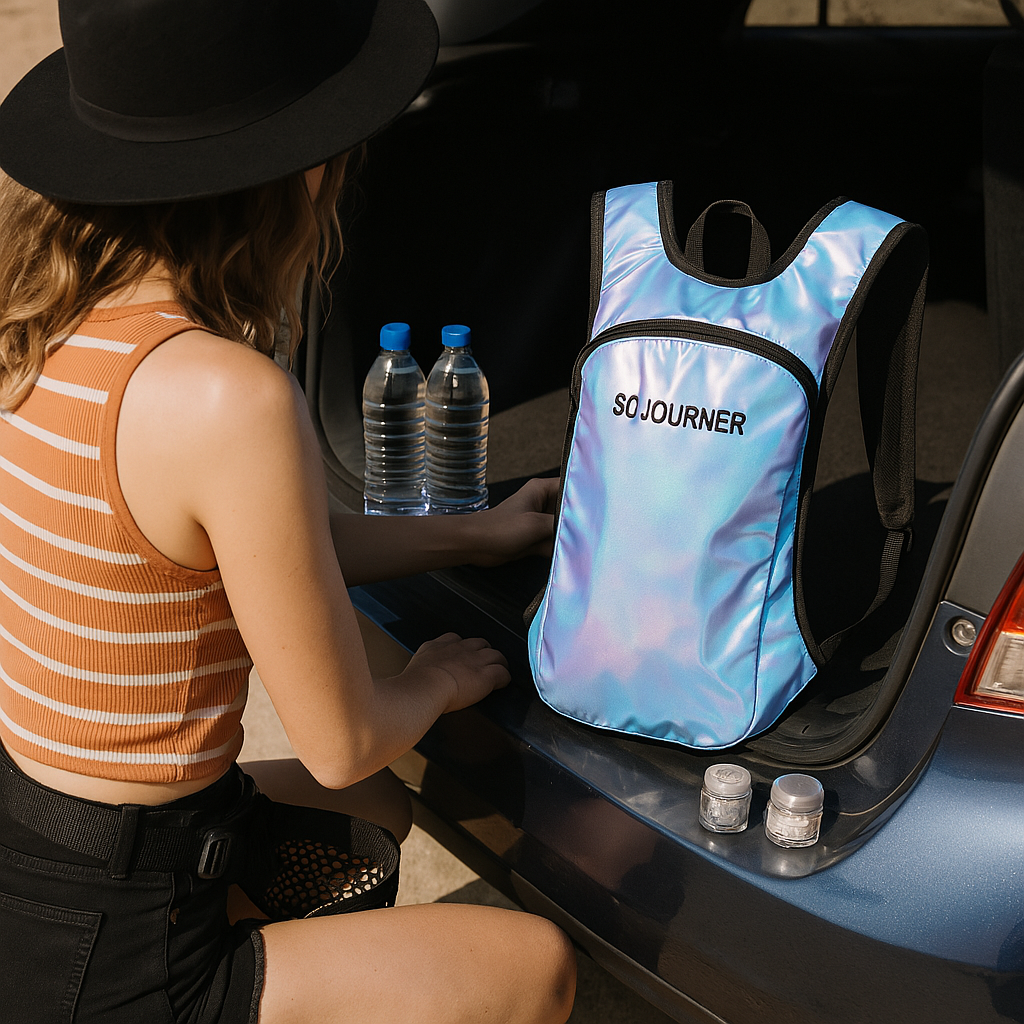
Hydration is non-negotiable. No alcohol doesn’t mean you can’t get dehydrated, it just means you’ll get dehydrated from dancing. A Sojourner Hydration Pack with the 2L bladder is what I run for day stage-hopping, and I swap to a fanny pack for night sets and river time.
The non-obvious stuff:
- Headlamp or flashlight. Lighting is limited outside Downtown Shambhala.
- Backup battery. The festival says most carriers should work on site, but check roaming rates with your provider before you leave the US.
- Food. The festival notes that little food is sold before the gates open, so bring substantial food and snacks for arrival.
- Rain gear. Mountain weather can change fast.
- Earplugs. Six sound systems and a lot of bass.
- A real pillow. You’ll thank me at hour 8.
- Fire safety. Summers are very dry and provincial fire bans are likely, so no open flames, candles or fireworks.
- Bears are real. Never leave food or scented items in your tent.
The six stages: where to be and when
Descriptions here follow the festival’s own stage page.
Pagoda. The flagship, with video mapping and electro and bass headliners. Rebuilt in 2017.
Fractal Forest. A funk-fueled space among the trees, with heavy beats and surreal visuals.
Village. A bass-focused stage built from tree forts, catwalks and steel, with a sound system the festival rates at 200,000 watts.
Living Room. Riverside and relaxed by day, then deeper, heavier grooves after sunset.
Grove. Set in an ancient cedar forest, playing bass, funk and downtempo.
AMPhitheatre. In the heart of Downtown Shambhala, with diverse lineups and back-to-back sets.
One schedule note: on Thursday only the AMP and Living Room stages open (plus the vendors), and all six stages run Friday through Monday. My rotation suggestion: Thursday settle in at those two. Friday sample all six. Then commit where the lineup pulls you. You will deviate from this plan. That’s fine.
Rave-mom rules for your first Shambhala
ANKORS is on site, identified by purple bandanas. They offer free, non-judgmental drug checking, info on drug effects and risks, and supplies like Naloxone training and fentanyl test strips. If you or your friend has anything, get it checked. That’s what they’re there for. Remember that possessing illegal substances still breaks the festival’s Code of Conduct, so read the rules before you go.
On-site help: Medical is open 24 hours in Downtown Shambhala, with a 24-hour mental health space called the Sanctuary next to it. The on-site SOS line is 1-778-724-1119, and outside the property you call 911.
The river is beautiful and unsupervised. Don’t float alone. Don’t float impaired. Simple.
Pin a meetup spot with your crew before phones die. Eat real food at least once a day. Check on your tent-mates. Hand someone water before they ask.
And leave no trace. This is actually someone’s farm. The community takes it seriously.
See you by the river
Shambhala is the one most US bass heads haven’t done yet, and it sells out fast. Get on the waitlist or mark the September sale for next year, get your border crossing dialed, pack for mountain weather, respect the ranch, use ANKORS if you need them. If you’re building your kit, our hydration packs and fanny packs are made for exactly this kind of weekend. See you by the river in July.
Maya, Sojourner Festival Editor