

If you’ve ever stood in the Lost Lands pit watching the dust cloud roll back over the crowd, you already know a cheap ski gaiter is going to turn your face into a swamp by the second drop. This festival gaiter guide is the one I wish someone had handed me before my first year at Legend Valley.
TLDR / The Quick Answer
- Dust-pit festivals need a lightweight, breathable gaiter. Not the fleece-lined ski kind.
- Look for a double-layer section over the nose and mouth, single layer everywhere else.
- Polyester microfiber or mesh blends breathe way better than cotton or neoprene.
- Pull it up during drops and dust surges. Pull it down between sets so you’re not rebreathing your own CO2 all night.
- A nose wire or shaped cut keeps it off your eyelashes and your sunglasses fog-free.
Why Lost Lands (and any dust pit) breaks regular gaiters
Legend Valley is a grass field in rural Ohio until about 40,000 headbangers show up and churn it into powder. By mid-day Saturday the stomp from Prehistoric Paradox alone will have the whole pit coughing. This isn’t theoretical. If you’ve been, you know.
Here’s where most people mess up: they grab whatever gaiter they already own, usually a ski/snowboard one left over from a Colorado trip. Those are built to hold heat in against cold air. Lost Lands in September runs 70s during the day, humid, zero wind in the pit. You will cook. By set two you’ll have a soaked rag plastered to your face and still be inhaling dust around the edges.
Cotton bandanas are worse. They soak sweat in about 45 minutes and then they’re just a wet strip of fabric doing nothing. The “any face covering will do” advice falls apart when you’re breathing pulverized grass and dirt for 10 hours straight.
Fabric weights, decoded
Fabric weight is measured in GSM (grams per square meter). You don’t need to memorize this stuff, but a rough map helps when you’re buying:
- Microfiber polyester, around 95gsm. The sweet spot for bass fests. Breathes, wicks sweat, still catches fine dust.
- Mesh panels. Great on the sides and around the ears for ventilation. Bad as the main filter layer over your mouth because, well, it’s mesh.
- Fleece-lined or neoprene. Skip for anything above 60°F. These exist for snowboarding. Different sport.
- Merino blends. Nice in theory, antimicrobial, don’t stink as fast. Also $40+ and overkill for a 3-day fest where your gaiter is going to end up stepped on in a tent.
Quick test before you leave the house: hold the gaiter up to a lamp. If you can see pinpoint dots of light through the mouth area, it’s probably too thin to filter dust. If you can’t see any light at all, it’s probably too thick to breathe through comfortably at hour 8. You want something in between.
Nose cut and fit, the part everyone ignores
Fit matters more than the fabric itself, and nobody talks about it. A shaped nose cut (contoured, not a straight tube) sits flatter against your face. Straight-tube gaiters ride up into your eyes every time you headbang and you’ll be adjusting constantly.
A nose wire is the single biggest upgrade if you wear sunglasses or goggles. Without one, every exhale fogs your lenses. With one, you crimp it over the bridge of your nose and the air vents down instead of up. Worth the extra three bucks.
Ear loops vs full tube: ear loops stay put in a packed crowd and don’t slide down when you’re jumping. Tubes are more versatile (you can wear them around your neck, pull them up over your head, use them as a sweatband) but they migrate more. I keep one of each in rotation. Our festival accessories collection has both styles if you want to see what the shapes actually look like.
Two more fit notes. Length: you want it long enough to tuck into the top of your shirt or bralette so dust doesn’t go down your collar. And if it’s cutting into your ears by hour 4, it’s the wrong one. Try before Lost Lands, not at Lost Lands.
When to pull it up vs down
This is the part I had to learn by messing up.
Pull it up: during drops, when the pit starts jumping, during dust surges between sets, and walking the campground roads at night when every golf cart kicks up a cloud.
Pull it down: between sets, when you’re eating, and the second you start to feel lightheaded. Rebreathing your own CO2 is a real thing and it stacks on top of dehydration fast. If your head starts to feel floaty and it’s not the set doing it, drop the gaiter and breathe.
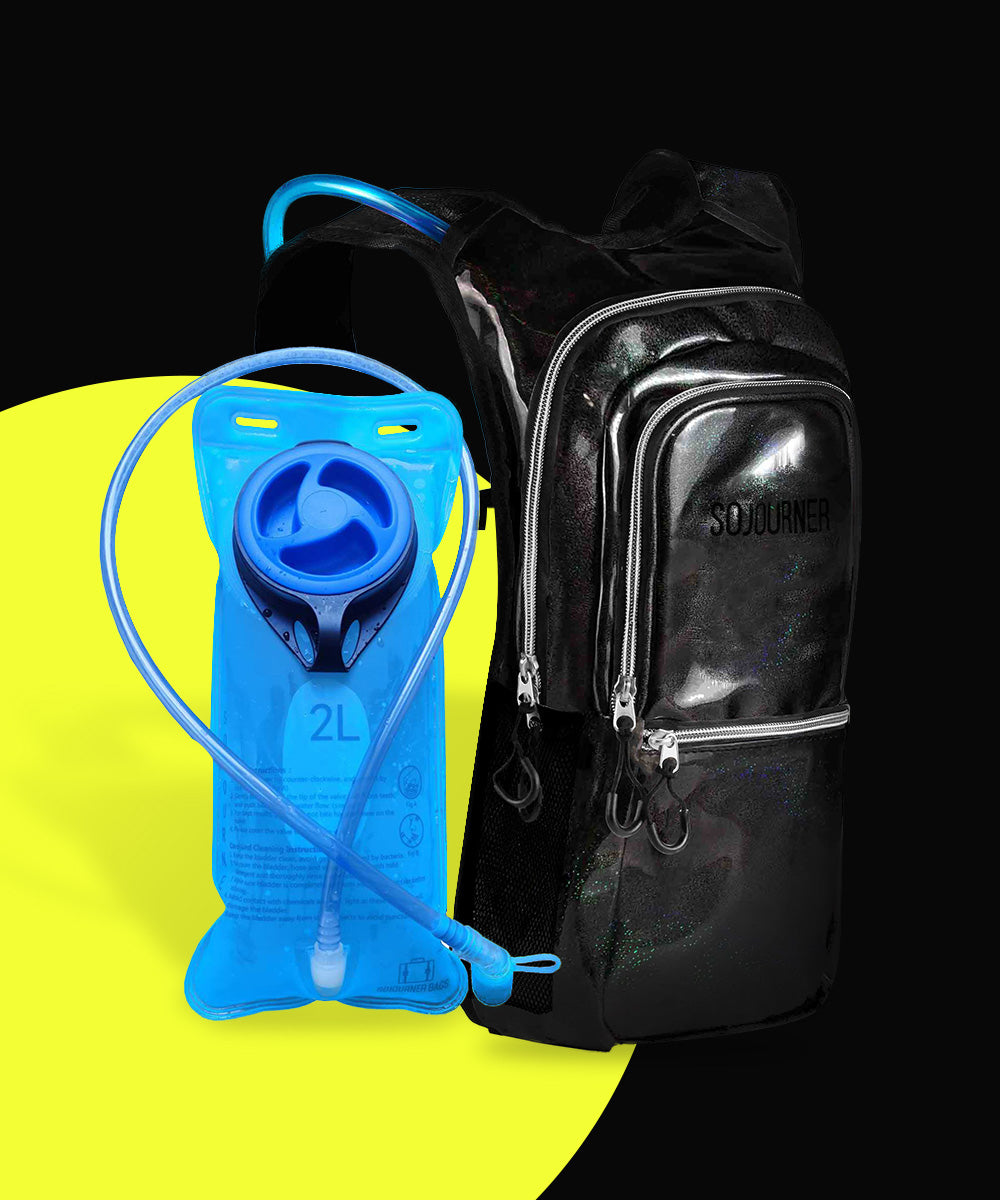
Rave-mom hours real quick: a gaiter is NOT a replacement for drinking water. You’re actually losing more moisture because you’re breathing warmer, recirculated air. Pair the gaiter with a hydration setup so you can sip without fully undoing your face every time. The Sojourner Hydration Pack with a bite valve lets you drink by just pulling the gaiter down an inch, which is the move. You’ll thank me at hour 8.
At sunrise sets specifically, pull it down. The air is cleanest right before dawn and you want the oxygen for the comedown-vibes part of the night.
What to pack as a backup
Bring two gaiters minimum per day. One will get sweat-soaked by midday Saturday no matter what, and switching to a dry one is one of those small moves that resets your whole day.
A few more things worth stashing in your fanny pack:
- A ziplock bag for the dirty gaiter so it doesn’t funk up everything else you’re carrying.
- Baby wipes. A 10-second face wipe between sets is underrated.
- Marcus’s trick from last Lost Lands: soak a spare gaiter in water, zip it in a bag, toss it in the campsite cooler before you leave for the stage. Come back at the set break, pull it out ice-cold, put it on your face. It’s the best 30 seconds of the day.
See you in the pit
Pick the gaiter that breathes, fits your face, and holds up for three days of dust and bass. Not the one that looked coolest in a drop photo on Instagram. If you want to see what the squad actually rotates through every Lost Lands, our accessories collection has the lightweight styles we keep going back to.
Hydrate, cover up when it matters, drop it when it doesn’t. See you in the crowd.
Maya, Sojourner Festival Editor
